History of SSA 1993 - 2000
|
he years from 1993 through 2000 marked significant changes in how the Social Security Administration (SSA) treated and invested in its workforce. The legacy of downsizing in the 1980s had a profound effect upon the Agency, and in the 1990s, the impending Retirement Wave of the Agency’s workforce received serious consideration. Attempts to ameliorate these issues, added to the other forces and advances in a rapidly changing workplace environment, obliged the Agency to focus on its workforce. SSA recognized the need to reflect the public it served, resulting in great advances in diversity. The relationship between its management and employees was recognized to be vital, and the Agency became a leader in partnership with labor. Technology and other advances in the workplace were beginning to be implemented with the goal of helping the workforce to be valued, efficient, and effective. The impetus for change was stimulated by the Clinton Administration. Just before the second inauguration President Clinton and Vice President Gore called the new Cabinet to the Blair House to discuss the issue of reinvention. They gave the Cabinet a set of papers that was subsequently published in January 1997, called the Blair House Papers containing the principles and ideas for agencies to use to make further inroads towards better process designs and customer service enhancements. Up to 1994, before independence, the Agency focused heavily on customer service initiatives. The Blair House Papers emphasized the importance of focusing on the Federal workforce – getting the best from employees and raising the spirit of employees. The results of National Performance Review’s (NPR) benchmarking studies indicated that the best in business organizations devoted substantial resources and attention to employee development and satisfaction. In addition, literature spoke to a strong and direct link between employee satisfaction and customer satisfaction. With this as the backdrop, the Agency embarked on initiatives to listen to the concerns and better understand the needs of its employees In 1998, Vice President Gore directed the NPR to conduct the first ever government-wide employee satisfaction survey, the NPR/OPM government-wide Employee Satisfaction Survey. The survey was sent to 34,000 federal employees selected at random, including 750 Agency employees. The survey created a baseline for measuring selected reinvention initiatives, assessed and benchmarked organizational change on key items, built on the Office of Personnel Management (OPM) Performance America database, and supported the collection of a set of balanced measures for federal agencies. The survey was conducted again in 1999 and 2000, reporting on and analyzing the results and developing an improvement strategy. [1] The Agency initiated its own surveys to better understand its workforce. The Agency Strategic Plan included an objective “to promote an Agency culture that successfully incorporates our values,” a part of the Agency goal “to be an employer that values and invest in each employee.” As a first step toward achieving this objective, the Office of Workforce Analysis conducted an employee survey, the Organization Culture Survey, to help determine what the Agency’s organizational culture is, what it should be, and any gaps. A workgroup then reviewed the results of both the Culture Survey and the results of the NPR/OPM Employee Satisfaction Survey, and they developed an improvement plan including both short-term and long-term actions to address any shortcomings. [2] In early FY 2000, the Agency began plans to implement the employee measurement strategy of the Market Measurement Program (MMP). [3] Based on research that indicated employee satisfaction was most strongly influenced and determined at the local work unit level, a plan was developed for a comprehensive satisfaction survey that would provide information about satisfaction with the local work environment. This survey was intended to support and complement the Culture Survey because the it provided the Agency with information at the organization level and identified issues that need addressing. It also identified issues that may lend themselves to local solutions, but the information was not aggregated in a way that enabled the Agency to focus at this level. The MMP employee survey would solve this gap by focusing at the local level, and would also enable the Agency to address work place improvements identified in the OPM/NPR employee surveys. In September 2000, the Agency hired a private contractor to plan and administer a test of an employee survey process that would: · Provide up-front communication prior to conducting the survey to explain the purpose and importance of the survey to employees and managers; · Ask questions market tested and validated to link to employee productivity; · Be simple in order to increase the likelihood of a higher response rate; and · Include a process for using the survey results using full participation of employees in planning improvements in their work unit based on the results. The success of this initial pilot will result in its full implementation of the survey process for all employees. More importantly, during the years from 1993 to 2000, the entire Agency grew to fully recognize that increased public trust and faith in the Agency and the programs it administers can only occur if the Agency demonstrates that it is a well-run organization whose employees feel valued and well-treated.
Diversity
n September 18, 1998, the Advisory Board on the President’s Initiative on Race concluded its work and presented a report containing its final recommendations to President Clinton. The report contained the Board’s observations on what they had seen and heard about race and its impact upon communities throughout the country. The President’s Initiative on Race later evolved into the President’s Initiative for One America, and President Clinton established a permanent White House Office on the President’s Initiative devoted to helping bridge the racial and ethnic divides in our society and to working to forge new coalitions across lines of color and class. In keeping with the President’s Initiative for One America, in his Oath of Office address, newly appointed Social Security Commissioner Kenneth S. Apfel, affirmed his commitment to establishing a diverse workforce. He stated, “[A]s the Agency enters the next century, we should continue to strive toward achieving a workforce that is like America: young and old, male and female, African American, Caucasian, Hispanic, Pacific-Asian, Native American, those with disabilities and those without.” Although the President’s Initiative for One America was not instituted until 1998, the Agency has a long history of activities supporting the Initiative that precedes 1998. Throughout the period from 1993 through 2000, Special Emphasis Programs, Special Emphasis Managers, and Equal Employment Opportunity (EEO) Advisory Groups had an instrumental role in promoting cultural diversity within the Agency. The Agency developed and monitors an Affirmative Employment Plan that identifies the representation of equal employment opportunity groups in its workforce, and recruitment efforts are targeted to address under-representation. EEO Advisory Groups were established to advise the Commissioner regarding the employment concerns of women, minorities, and disabled employees as well as the service delivery needs of the Agency’s customers. The Agency also used special hiring authorities to recruit employees with disabilities, and provided reasonable accommodations to enable these employees to have a level playing field.
Programs and Policies
pecial Emphasis Programs were established in response to Presidential Executive Orders. The programs [4] were the Asian Pacific American Program, Federal Women’s Program, Hispanic Employment Program, Minority Concerns Program, and the Program for the Employment of Persons with Disabilities. The Asian Pacific American Program was established in 1992 to give attention to and focus on that fast growing, complex, and diverse group which had previously been part of the Minority Concerns Program. The Federal Women’s Program was established to enhance employment and advancement opportunities for women. The purpose of the Hispanic Employment Program was to ensure that Federal employers recruit and hire Hispanics and once hired, provide them with career development opportunities. The Minority Concerns Program was initially established to address the employment concerns of African Americans, Asian Pacific Americans, and Americans Indians, and to improve services to their communities. The Program for Employees with Disabilities gave technical advice, leadership, and guidance to managers in providing greater career opportunities to employees with disabilities. EEO Advisory Groups were also formed to advise the Commissioner and other Agency managers of the employment and service delivery concerns of their constituencies. The advisory groups were: · Black Affairs Advisory Council (BAAC); · National Advisory Council for Employees with Disabilities (NACED); · Hispanic Affairs Advisory Council (HAAC); · Pacific Asian American Advisory Council (PAAAC); · Women’s Affairs Advisory Committee (WAAC); and · American Indian Alaska Native Advisory Council (AIAN). These groups met periodically with the Commissioner and other members of the Executive Staff, pursued initiatives of interest to their groups, and held training conferences where employees and management came together to talk about service delivery, recruitment, training and career development and advancement. For example, the mission of HAAC is to ensure courteous, respectful, and sensitive treatment of all clientele, including non-English speaking persons. HAAC pursues this goal by educating others about the shared responsibility to provide services with sensitivity, and by advocating for and supporting the recruitment, development, and advancement of Hispanic and bilingual persons throughout the Agency.
Affirmative Employment Program
The Agency had an Affirmative Employment Program (AEP) Plan for women and minorities to assess the state of equal opportunity in the Agency. The AEP Plan was a tool to strengthen EEO for women and minorities by identifying specific areas of under-representation, barriers to equal opportunity, and concrete actions to correct identified deficiencies. The completed plan contained: 1) Program analysis detailing the status of affirmative employment efforts within the Agency; 2) Description of identified problems and barriers in personnel and management policies, practices, systems, or procedures; and 3) Statement of objectives and action items to resolve identified problems and barriers. Numerical objectives were established when the workforce representation of an EEO group is severely below their corresponding civilian labor force (CLF) representation. The purpose of numerical objectives was to attain a workforce that was reflective of America; the objectives were goals, not quotas, stated in terms of a percentage of available opportunities. A separate plan, the Affirmative Action Program Plan for People with Disabilities, addressed the hiring, placement, and advancement of individuals with disabilities. Additionally, the Agency used a Disabled Veterans Affirmative Action Program Plan to enhance employment opportunities for disabled veterans. The AEP program enabled the Agency to identify imbalances in the workforce and take corrective actions. The SSA workforce consisted of 62,394 full-time and part-time permanent employees as of FY 1999, a decrease of 2,979 employees since FY 1993. While the workforce has decreased, it has become more diverse as a result of increases in the representation of women, minorities, and employees with disabilities. The overall representation of women and minorities in the Agency exceeds their representation in the (CLF). [5] Women make up 70.7 percent of the Agency’s workforce compared to 46.5 percent for the CLF. Minorities make up 40.2 percent of the Agency’s workforce compared to 27.2 percent for the CLF. As a result of targeted recruitment efforts, the workforce representation of Black men, Hispanics, Asian Americans, American Indians, and employees with disabilities have increased since FY 1993:
Recruitment Strategies In 1980, the Agency had over 84,000 employees, with this number decreasing over 20 percent during the downsizing that occurred between 1980 and 1989. While the staffing level as of FY 2000 was close to 62,000 full- and part-time employees, workloads continued to grow and were predicted to rise even more as the “baby boomers” reach retirement age. As of FY 2000, the Agency possessed a mature workforce; the average worker was 46.7 years old and had an average of 20 years of Federal service. As large numbers of experienced employees prepared to leave, often with 25-35 years of service, the Agency recognized that those who follow were not likely to remain in the organization for such lengthy periods. These facts helped shape the new recruitment and retention strategies needed. In 1996, the General Accounting Office (GAO) provided a report to Congress entitled SSA Faces Challenges. The report stated, “[the] SSA must build a workforce with the flexibility and skills to operate in a changing environment.” In 1997, the GAO reported to Congress with the report, Significant Challenges Await New Commissioner. This report described challenges surrounding the issue of building a workforce with the flexibility and skills to operate in a changing environment, including a changing employee and client base. In 1997, the Agency published its first strategic plan since independence, and the importance of workforce planning was reflected in the Agency Strategic Plan (ASP). One of the objectives listed in the ASP was “to create a workforce to serve SSA’s diverse customers in the 21st century.” The Agency recognized the need for the workforce to reflect the diverse population it serves, both today and as demographic changes occur in the future. To accomplish this, both a short-term and a long-term recruitment strategy to recruit employees from historically underrepresented groups were developed. In October 1998, the Agency compared its diversity profile with the CLF and determined that it was severely under-represented in three EEO groups: Asians, Hispanics, and persons with severe disabilities (PWD). Further, based on the Census Bureau’s year 2000 projections, without a concerted recruitment effort, this gap between the CLF and the Agency’s workforce would widen for these three groups. In response, the Agency developed a short-term recruitment strategy to begin eliminating this gap and to take itself through the FY 1999 recruitment cycle. The strategy proposed consisted of four action items: · Advertising career opportunities via the internet and in key minority periodicals; · Providing an e-mail application process; · Establishing and/or strengthening our ties with State employment and vocational rehabilitation offices and secondary education placement centers; and · Establishing multi-disciplinary recruitment teams with hiring authority to visit predetermined colleges and universities and attend recruitment fairs. While this short-term strategy was in effect, the Agency made greater use of the Schedule A [6] and Outstanding Scholar [7] hiring authorities to recruit new employees from underrepresented groups. In addition, the Agency had also utilized the Office of Personnel Management’s Certificates of Eligibles to find candidates for employment who did not qualify under the aforementioned hiring authorities. In May 1999, the Agency introduced its long-term strategy to address the under-representation of Asians, Hispanics, and employees with disabilities. This strategy expanded upon the framework already established in the short-term strategy and was designed to promote the Agency as the employer of choice. The long-term strategy, which is intended to carry the Agency through the year 2013, includes a marketing strategy, formal recruitment methodologies, and a system to monitor progress and hold components accountable. In specific, the long-term strategy included: · Improving and expanding the recruitment relationships with colleges and universities that have high concentrations of the under-represented groups in their student populations; · Creating stronger networks with State vocational rehabilitation and employment offices and the Department of Veterans Affairs in all states, Puerto Rico, and the Virgin Isles; · Using displaced private industry employees as a recruitment source; · Using employment incentives (e.g., recruitment signing bonuses, a tuition reimbursement program, hiring at higher grade levels, paying relocation expenses, etc.) to attract top computer science candidates; · Advertising extensively in key publications marketed to targeted populations; · Investing in promotional items (e.g., pens, cups, notepads, mousepads, keychains, mini-flashlights, etc.) with SSA logo for distribution at recruitment events; · Participating in the President’s Committee for Employment of Persons with Disabilities Workforce Recruitment Program; and, · Developing tailored recruitment packages for regional and field managers, including a pamphlet entitled “Working for Social Security” and other employment information. As a formal recruitment methodology, the long-term recruitment strategy recommends the establishment of multi-discipline recruitment teams to conduct on-campus recruitment at predetermined schools, advertise vacancies, and maintain an Agency presence at career fairs. The teams are to include a Personnel Office representative familiar with hiring authorities, an employee from the group targeted for recruitment with whom potential candidates can identify, and a representative from component for which candidates are being recruited who can talk about the available positions. As a result of implementing our recruitment strategies, the Agency in FY 1999 and FY 2000 hired Asians, Hispanics, and persons with disabilities at a rate significantly greater than their representation in the CLF. In FY 1999, the Agency hired a total of 2,603 new employees, and in FY 2000, as of August 30, 2000, the Agency hired 2,366 new employees:
FY 1999 FY 2000 (thru 8/30/00) CLF* Asians 181 (7.0%) 154 (6.5%) 3.7% Hispanics 602 (23.1%) 547 (23.1%) 11.4% PWD 285 (10.9%) 161 (6.8%) 5.9% As depicted in the charts below, the workforce representation of Asians, Hispanics, and persons with disabilities is moving steadily closer to parity with their CLF representation.
10/1/98 9/30/99 8/30/00 Net Change CLF* Asians 1.9% 2.3% 2.57% +0.6 3.7% Hispanics 7.7% 9.2% 9.9% +2.2 11.4% PWD 1.9% 2.6% 2.7% +0.8% 5.9% In 2000, the Agency received recognition for its progress when Equal Opportunity Publications (EOP), an outside organization, published a cover article calling SSA a model employer for improving the representation of persons with disabilities in their Winter 1999/2000 issue of CAREERS & the disABLED magazine.
American Indians and Alaska Natives Initiative Although American Indians and Alaska Natives were not under-represented in the Agency’s workforce, their numbers in the CLF had been so small they were not initially included along with Asians, Hispanics, and persons with disabilities for special recruitment activities. In March 2000, the Agency hosted an American Indian and Alaska Native Service Delivery Conference in Denver, Colorado to explore how to better serve and represent these communities. The conference served as a catalyst shifting attention and focus to this group. The conference was attended by representatives from over 120 tribes, and the Conference’s programs and activities focused on ways to increase their representation in the Agency’s workforce and improve outreach and service delivery to American Indians and Alaska Natives. As a result, the Agency established an American Indian and Alaska Native Executive Steering Committee to develop and implement projects that would achieve the goals of increasing the workforce representation of American Indians and Alaska Natives and improving services to their communities. These goals included such steps as establishing a Cooperative Education Program [8] for students of Tribal Colleges and Universities and establishing a formal relationship with the National Indian Council on Aging so that it could access the Council’s extensive database on the public information needs and demographics of American Indians and Alaska Natives. In addition, the Agency developed a communications plan targeting American Indians and Alaska Natives. The Agency also promoted the cultural awareness of its own workforce to the needs and concerns of this constituency group. A two-part interactive teletraining video series was broadcasted, delivering cultural and awareness training. Part I provided a broad prospective of the diversity in American Indian and Alaska Native cultures. In Part II, an Agency panel of American Indian employees representing various tribes discussed Social Security claims, legal and urban issues, and views from life on reservations. Disabled Individuals: Reasonable Accommodations The Agency has always prided itself in providing reasonable accommodations to the known physical and/or mental limitations of qualified applicants or employees with disabilities (EWD). In 1993, the Agency began purchasing adaptive devices and personal computers configured with adaptive device software/hardware. The Office of Civil Rights and Equal Opportunity continued to manage the Agency’s Full Time Employee (FTE) Pool that provided readers for blind and low-vision employees, personal assistants for severely mobility-impaired employees, and sign language interpreters for field offices with several deaf employees. In 1993, the Agency employed 450 employees with severe disabilities. In 1994, SSA further progressed in dealing with its disabled employees. An Assistive Device Support Help Desk was established in the Agency’s Model District Office to take calls from employees experiencing technical difficulties with their adaptive hardware/software, and the Agency began the Accessible Computer Configured Employee Support System (ACCESS) project. The ACCESS project had oversight responsibility for purchasing adaptive technology and upgrading obsolete equipment (i.e., its work became part of the Agency’s procurement projects), providing employees with disabilities full accessibility to the Agency’s computer systems environment. The Agency received recognition for its progressivism. On September 8, 1994, the Agency received a “Golden Hammer” Reinvention of Government Award to recognize the Agency as “Heroes of Reinvention” for integrating adaptive hardware and software into the Agency’s infrastructure and designing training programs to meet the needs of employees with disabilities. In addition, on October 20, 1994, the ACCESS workgroup was presented with an HHS Secretary's Continuation Improvement Recognition award for their efforts ensuring that Agency employees with disabilities would have full access to the new IWS/LAN system. During 1995, the Agency provided reasonable accommodations to 575 of its employees with disabilities. [9] It awarded contracts that significantly improved accessibility for employees with disabilities: · Training for employees with disabilities provided computer and adaptive devices at the employee’s worksite (generally on a one-to-one basis), nationally. · Provide voice-activated computer workstations to employees with mobility impairments (i.e., voice-activated systems allow employees who do not have total use of their hands or upper bodies to use computer programs “hands free”). The first Agency wide contract for sign language interpreter services for deaf employees was awarded in June 1995. [10] The contract was established to support the needs and provide reasonable accommodation for deaf employees, and it provides for nine full-time on-site interpreters at Agency headquarters as well as providing for interpreter services in field offices. In addition, an Employees with Disabilities inter-component Workgroup was formed to prepare for the large deployment of 1,742 local area networks and 56,600 computer workstations nationwide; the workgroup made the necessary plans and performed integration testing to insure that assistive technologies would be part of the national IWS/LAN rollout. The Agency was again recognized for its progress in 1996. The Ford Foundation and the John F. Kennedy School of Government selected the Agency as one of 25 finalists (from 1,560 applicants) for the 1996 “Innovations in Government Award” sponsored by Harvard University; the Agency was awarded a grant of $20,000. As the national IWS/LAN rollout entered 1998 and 1999, the Agency processed another 450 and 430 IWS/LAN site orders, respectively, for employees with disabilities. In recognition of its successes, the Agency received the Stevie Wonder Vision Award-Siemans Award of Excellence [11] and the City of Baltimore Mayor’s Commission for Disabilities Kurt L. Schmoke Public Employer of the Year Award.title> [12] The Agency also provided refresher training[13] on adaptive equipment. In addition, the EWD Workgroup designed a resource site on the Intranet to provide information for employees with disabilities and their managers regarding available devices and other helpful suggestions. This workgroup was given a special budget under the Agency’s Diverse Workforce Key Initiative to use for special needs such as preparing training materials in accessible format and for ensuring that all training centers were accessible to employees with disabilities. In 2000, the Agency processed over 500 reasonable accommodation requests, and in adherence with recent Executive Orders, [14] continued its long-standing commitment to hiring people with disabilities through its competitive hiring process and the Selective Placement Program. In support of these Executive Orders, the Agency committed itself to hiring 1,300 additional persons with disabilities, or 13 percent of its hires for FY 2001-2005. Once hired, the Agency strived to insure that employees with disabilities were provided with equal opportunity in the workplace environment. Throughout the Clinton Administration, the Agency worked hard to make its workforce accurately reflect the community it serves. By doing so, the Agency is better equipped to serve the public in an appropriate, effective, and efficient manner. While the Agency is not underrepresented as a whole in minority employees, targeted recruitment of specific underrepresented groups such as Asian Americans, Native Americans, and persons with disabilities led to large gains in both the recruitment and retention of these groups. Detailed initiatives to retain these underrepresented groups complemented these recruitment efforts, and with leadership initiatives from Commissioner Apfel, great strides were made.
Partnership
n 1993, President Clinton signed Executive Order (EO) 12871, “Labor-Management Partnership,” mandating federal agencies to involve employees and union representatives as full partners to identify problems and develop solutions to accomplish the Agency’s mission. By working in partnership with the American Federation of Government Employees (AFGE), the exclusive representative for approximately 50,000 bargaining unit employees, the Agency hoped to foster a much closer relationship between the union and management to create tangible benefits in service, cost-effectiveness, productivity, efficiency, and quality of its work environment. Prior to EO 12871, the history of labor-management relations in many federal agencies was one of internecine conflict; SSA’s story was similar. Labor-management relations were strained at best and dysfunctional at worst. However, the Agency applied itself to implementing EO 12871 vigorously, and both its management and union leadership saw an opportunity to break out of old patterns of behavior. It is this joint commitment, reaffirmed in the 2000 SSA/AFGE Ratification Agreement, [15] that has made partnership an effective effort.
The NPC’s objectives were: · Improve SSA’s service delivery; · Help SSA’s leadership make better decisions; · Deal with Agency-wide issues; and · Generate guidance for lower level partnership levels. The NPC worked towards achieving these objectives in many ways. For example, it encouraged the formation of partnership councils throughout the Agency. Originally, these councils were mandated to, among other things, establish alternative dispute resolution (ADR) methods and options for informal disposition of employment disputes. Prior to independence, the Agency’s ADR program was rudimentary with no coordinated approach. Since then, the Associate General Counsel for General Law has assumed the role of the Agency’s ADR Officer and has been the focal point of its ADR efforts. In conformity with the Administrative Dispute Resolution Act (ADRA) and the President’s directive on ADR, the Agency complied with the specific requirements of the ADRA and established ADR programs in various areas. Further, the Agency extensively trained managers and employees in ADR techniques; these techniques have been applied to collective bargaining and labor-management partnerships as well as in resolving employees’ complaints of discrimination. These initiatives resulted in a marked decrease in the number of grievances and unfair labor practices filings. For example, the number of arbitration requests from the period 1994 through 1996 showed a reduction from 488 requests in 1994 down to 331 in 1996. title>[17] The principles of ADR have helped to reduce other types of litigation; the number of unfair labor practice charges filed in 1993 was 382, but fell to 167 in 1999. From the period 1994 through 1999, the number of union-management grievances decreased from a high of 465 in 1994 to only 171 filed in 1999. The local partnership councils dealt with issues that might otherwise have required negotiation or litigation, and their success allowed the scope of their work to grow from personnel issues to encompassing the facilitation of work processes. Partnership councils dealt with matters relating to customer service, operational efficiency, employee empowerment, and labor-management issues. These partnership efforts resulted in enhancements in career opportunities, establishment of developmental programs, and joint efforts to improve family friendly practices within the Agency. In changing the relationship that existed between labor and management, which was largely adversarial, the NPC provided for systematic training of agency employees in consensus building methods of dispute resolution. At the direction of the NPC, training programs and train-the-trainer sessions were developed in interest-based bargaining (IBB) covering partnership principles, conflict resolution, consensus decision-making, and other IBB techniques. This training consisted of the following: · In May 1994, top Agency executives along with the AFGE Council Presidents attended a 3-day training session that included interest based techniques, consensus decision-making, and conflict resolution. · Partnership councils (20 Agency-wide) received 3-day training sessions conducted by Syracuse University, emphasizing conflict resolution, consensus decision-making, and IBB problem solving techniques. The remaining councils received similar training provided by a variety of sources, including the Federal Mediation and Conciliation Service (FMCS) and internal Agency resources. · By 2000, the Agency had trained a national cadre of 220 facilitators in IBB problem solving, consensus decision-making, partnership principles, and various tools and techniques to help group processes. The facilitators would help address and resolve all types of problems and issues. As partnership councils continue to be established, training will be an ongoing process. As the Agency and the union work in a collaborative fashion, this training will gradually provide the groundwork for a culture change throughout the organization. One of the requirements in EO 12871 was for agencies to evaluate the impact of partnership on its organizational performance. The Agency, on July 8, 1997, formed the Partnership Evaluation Team (PET) to conduct an objective evaluation of how the process had been operating since its implementation. The NPC issued the team’s report in March 1998, and it emphasized how the Agency had benefited from working together since its inception. The issuance of this report made the Agency the first to complete an agency-wide evaluation of the effects of labor-management partnerships on organizational performance, and the report identified over 1,500 activities that have aided effectiveness and performance and that had been initiated through or enhanced by partnership. The PET found numerous examples of components that had been working with divisively polarized relationships between management and their union counterparts. After identifying these problem situations, and then implementing jointly developed plans for partnership, many were then able to work in collaboration. Moreover, these partnerships often times grew beyond their initial involvement in personnel issues and became problem-solving teams on methods to make the Agency serve its customers better. The NPC and the PET were recognized for their successes in September 1998 with their receipt of the John N. Sturdivant National Partnership Award. The award cited the SSA/AFGE joint effort as “…an outstanding example of how labor-management partnerships are meeting the National Partnership for Reinventing Government’s goal of a government that works better and costs less.” The SSA and the AFGE dealt together in partnership on many initiatives that have improved customer service (e.g., the 800 number telephone service; systems expansion; the reinvention of work processes). Other initiatives showing strong union and Agency cooperation included the Agency’s 2010 Vision workgroup, which is helping to develop the customer service plans and goals of the future. The NPC realized the importance of sharing policies, philosophies, and communicating with these councils, and thus sponsored a partnership conference in June 2000. Council members, high level union and management officials, and speakers such as Janice Lachance, Director of the Office of Personnel and Management (OPM), and David Feder, Assistant General Counsel of the Federal Labor Relations Authority, communicated their views and experiences. They also shared information about the types of resources and assistance available throughout the federal community to assist in establishing and maintaining workable partnerships. The NPC also used this forum to present the SSA/AFGE Partnership Recognition Awards to employees who had worked tirelessly and diligently over the previous year on partnership initiatives. The NPC chartered a second workgroup to update the inventory of partnership projects and activities to determine if they had increased, how they may have changed, and the types of issues being addressed since the first evaluation report was released. In March 2000, this new team submitted its report to the NPC, identifying a total of about 400 new activities being taken by partnership councils. As with the first study, the responses showed that the councils have focused on a variety of matters dealing with customer service and operational issues. The President’s Memorandum on Reaffirmation of Partnership issued on October 28, 1999, required Federal agencies to report on progress being made in achieving the goals of the memorandum and the directives set forth in EO 12871. On April 14, 2000, the Agency submitted its report to the Office of Management and Budget (OMB) for the President. In that report, the Agency highlighted the ways in which we have met the objectives by citing the many examples of partnership activities. Since the latest report was released, the number of partnership councils increased to 67 as of August 2000. The councils were very productive and constructive in dealing with issues of concern to both the union and management. Through this continually evolving process, the Agency and its union, the AFGE, worked together to find ways to enhance the working environment through developmental and growth opportunities, to facilitate efforts to address productivity and efficiency, and to limit fiscal costs to the Agency. By taking the initiative in partnership, the SSA fostered a close relationship between the union and its management for the benefit of both its internal and external customers. Internally, employees have felt more invested in management decisions, and frictions between union and management were resolved through ADR and other less costly and adversarial methods. Externally, suggestions for improved work processes came directly from those performing the work, increasing efficiency and creating cost savings for the American public. The investment by the Agency in this initiative had borne fruit and resulted in concrete progress.
Technology:
ast changing technology has significantly affected not just how the Agency serves the public but also in how it does its work. While its workforce is one of its most valuable assets, technology is equally important because it is essential to the effectiveness of that workforce and indispensable to the success of the Agency’s business approach. By providing the resources necessary and investing in the technology needed, the Agency has reaffirmed to its workforce that it takes seriously the new challenges of increased workload and government streamlining. SSA’s investment in technology indicated the value the Agency placed on its workforce. The years from 1993 through 2000 were characterized by a surge of advances in providing the necessary technological tools to its employees to perform their work. Without this type of investment, the Agency would jeopardize its commitment to hiring and maintaining a highly skilled, high-performing, and highly motivated workforce that is critical to achieving the Agency’s goals. The Agency’s ability to meet customer expectations and service depends on the expanded use of automation. The success of SSA to use technology to support improved or redesigned processes rests on a strategic technology infrastructure that provides automation at the employee’s desktop, makes needed information immediately accessible in electronic form, and moves toward a paperless processing environment. The Agency established the Architecture Support Staff to coordinate the efforts of its Information Technology (IT) community with respect to the establishment and maintenance of an Enterprise-wide Information Technology Architecture (EITA). The Staff supports legal mandates [18] and federal guidelines [19] . While the push for better technology has been a constant through the Clinton Administration, the urgency had varied with time and circumstance. The early years of the Agency under DHHS were characterized as a slow evolution. Hardware and software improvements were done slowly without an overarching vision. There was no clear conception of how technology was going to completely change how Social Security does its work. Independent Agency status allowed SSA to move more quickly in creating an automated work environment. Commissioner Kenneth Apfel and members of his leadership team embraced the coming changes, and provided the vision and energy to push forward from such setbacks as the PEBES online privacy predicament. While an important learning experience, it made the Agency slightly cautious in its approach to technological change and risk taking. But in recent years the Agency’s leadership had become very strong proponents of technology, and have created the environment and the push for SSA to become a leader in the Federal Government in technology.
Intelligent Workstation/Local Area Network (IWS/LAN) Installation
he IWS/LAN initiative was the linchpin for both the Agency’s customer service program and its entire business approach. It facilitated many of the planned productivity improvements and enabled full reengineering of the disability process, including processing time reductions and other improvements projected in the redesign. It will provide greater capacity and increased processing capabilities essential for the major service delivery and process redesign initiatives. In 1993, the Agency’s Information Technology Systems Review Staff (ITSRS) recommended funding strategies that included maintenance of separate placeholders for budgeting Agency workstation/software upgrades in anticipation of users’ needs. This actually occurred prior to the IWS/LAN project implementation. The ITSRS also responded to concerns expressed by the Government Accounting Office (GAO), the Office of Management and Budget (OMB), and the Congress concerning the IWS/LAN initiative. This work helped promote support and funding [20] from these bodies required to move forward with an IWS/LAN strategy. They also recommended funding strategies for wide area network enhancements, support services, and expanded telecommunications infrastructure required for IWS/LAN future implementation. The original decision to provide intelligent workstations to every employee, interconnect all the workstations by LAN, and connect all the offices to the regional computer centers/ National Computer Center by wide area network was made in 1993. With over 60,000 employees in over 1,600 offices nationwide, the Agency redesigned and prepared each facility nationally with new data cables and an upgraded electrical system. Beginning in 1994 the Agency, with the support of GSA, began site preparation of all Agency offices at an average rate of one office each working day. The GSA used innovative methods to meet the Agency’s needs in an economic manner, and mainframe computers and specialized software were used to track the site prep process and keep the program on schedule. A seven-year IWS/LAN contract [21] was awarded on June 14, 1996, and it provided for the installation of 1,742 LANs comprising 56,000 workstations at sites nationwide. Meaningful discussions with vendors during the acquisition process provided necessary information while protecting the integrity of the acquisition process. In December 1996, the Agency began the installation of the National IWS/LAN contract, which by 1997 was completed in 487 sites. Additional workstations and LANs were purchased and installed at Headquarters and Regional Office locations, bringing the total installation to 91,650 workstations and 2,129 LANs by mid-1999. In addition, the Agency determined that it would need up to 300 additional IWS/LANs to complete the target systems environment. In August 1999, OAG awarded a 3-year contract, [22] which included 6,178 workstations. The ITSRS had guided this contract, adjusting quantities based on identified requirements and benefits. The installation of the IWS/LAN in the Agency brought a host of new tools to improve and enhance work processes. The Office of Operations, responsible for direct customer support, was most dramatically affected in terms of impact on its business process. Technical and management staff recognized that these new tools were a means to improve productivity and enhance communication among its hundreds of facilities and thousands of employees. The most immediately significant of those new tools and technologies was the Intranet. In recognition of its efforts with the IWS/LAN project, the Agency received the 1994 Federal Technology Leadership Award, sponsored by Government Executive magazine. The annual national competition recognizes outstanding achievement in making government more effective through the use of information systems. Although IWS/LAN was installed in all Agency offices, the project evolved with the changes, expansions, and relocations of the offices. The standards set forth earlier and the processes in place, along with the GSA help, will ensure that the Agency continues to provide a safe and healthy work environment and reliable computer systems to all its employees.
Installation of IWS/LAN in Foreign Service Programs (FSP)
The Agency, recognizing the needs to improve service and work environment in its foreign program, has installed its IWS/LAN in the Manila DVA office and eight of the largest claims-taking FSPs. [23] These overseas offices now have direct access to the Agency’s databases and programs, and are no longer dependent on U.S.-based offices to provide them with information they require to serve foreign based Social Security customers. This results in more efficient work processing and the ability to assist many customers on first contact.
The Intranet
he IWS/LAN initiative allowed the development and utilization of the Agency’s Intranet. The Intranet is more than the Internet in that it is a self-enclosed secure network comprising of only Social Security servers, and can only be accessed by Social Security employees with valid and current security clearance. The Intranet has become the vehicle by which components communicate with all other parts of the Agency, directly down to the individual employee. With over 1,600 offices nationwide, each office and each employee is no longer cut off from the rest of the Agency due to their distance from the headquarters complex or their regional office, but is now interconnected by technology. The possibilities for further collaboration and future synergies are only beginning to be realized. More than just email, the Intranet allows a component to place the vast majority of its information in easy reach for almost every Social Security employee nationally. The entire resources of the Agency were now available as easily as opening an Internet browser. Moreover, because of its secure nature and availability only on internal Social Security networks, the Intranet allows the delivery of services to its internal customers in ways that are still being discovered.
SSA Digital Library
The Digital Library was first unveiled in July 1998 at the headquarters complex. The size and scope of the Library was expanded in order to reach all Agency employees nationwide by Spring 2000. Its strength lies in its ease of use and accessibility. It contains a catalog listing of all of the hardcopy materials maintained by the Agency’s Library, records management information, historical information, access to over 3,000 compact discs containing thousands of journals, books, newspapers and magazines, and the USA PhoneDisc. The Library also has access to online services such as Lexis/Nexis and WestLaw and NewsEdge (an up-to-the-minute accounting of current events worldwide). From the onset, the variety of materials available via the Digital Library has been determined based upon user needs and user requests. All materials resident in the Digital Library are intended to better serve the customer base and assist Agency employees in doing their jobs as efficiently and effectively as possible.
Electronic Forms Implementation
On September 1, 1993, the Agency began working on a tactical plan for the national implementation of electronic forms. This initiative sought to put into an electronic format as many of the forms used by field offices as possible, thereby eliminating various costs (e.g., printing and shipping of forms from a centralized location) and streamlining the processing of the forms (directly into the workstation). This initiative was part of the Agency’s strategic priority to evolve into a paperless agency. Over several years, the Agency continued to investigate electronic forms and subsequently developed a contract with a vendor through the Government Printing Office for the conversion of paper forms into an electronic format using the FormFlow software. Initially as a pilot, 62 forms were converted and placed on the IWS/LAN systems of a few field offices. The success of this pilot resulted in its wider implementation in 1999 into other field offices. [24] In August 2000, a SSA Forms Repository was released onto the Agency’s Intranet, allowing most field offices access to all of the electronic forms. The forms are provided in Adobe PDF format (Print-Only) and in JetForm FormFlow format (Intelligent Fill-able Forms). In addition, the Agency continued to work toward providing the general public access to various Social Security forms via the Internet. The Agency depends on thousands of employees across the country to carry out its mission to provide world-class service. The Intranet has become a vehicle for effectively communicating information while providing employees with new tools to do their jobs more efficiently and more productively. The next task is to successfully implement this throughout the Agency and ensure that training is available for the efficient use of this tool. This will, in turn, provide the impetus for developing more creative applications to improve work processes and employee quality of the workplace environment.
Other Advances in Technology
ith the need to improve IT infrastructure constantly, the Agency has made improving the its standing on technology a key goal. Investments in technology infrastructure are necessary to support distributed computing, web-based processing, more robust management information, and the emergence of voice recognition and machine language translation technologies. Large efficiencies may be gained by linking web-based technologies with existing legacy systems and established service delivery models. The e-SSA Technology Strategy report released in November 2000 described Social Security’s transition plans and highlights the productivity gains that the Agency expects to realize from the planned infrastructure upgrades. Another key component was the need for regular hardware refreshment. The Agency’s technological infrastructure must be refreshed at regular intervals to keep up with the rapid pace of technological change. The Commissioner and Deputy Commissioner have pushed to reduce the Agency’s procurement cycle for new IT equipment from seven to three years. The decision to move to a three-year refreshment cycle meant that every Agency employee will have a new workstation by the end of 2002. Between FY 2000-2002, the Agency will spend $45 million a year to replace its 91,650 existing workstations and make limited upgrades to the supporting infrastructure of servers, printers, laptops, scanners, controllers, etc. As an initial step, in August 2000 the Agency purchased and began installing 40,000 personal computers in the first phase of this three-year cycle. [25] Another improvement was to the telecommunications network infrastructure. An adequate telecommunications infrastructure was required to support Social Security’s electronic service delivery initiatives, without which the Agency would not be able to take full advantage of current and future technologies. In August 2000, the Agency entered into a contract to obtain new “frame relay support” equipment and installation. This more efficient technology doubled the capacity of the Agency’s telecommunications lines; improved response times for network-based applications; improved manageability and reliability of the Agency’s computer network; and enhanced support for new network video and telephone services. As a result, all employees on IWS/LAN will have Internet access on their desktop by December 31, 2000. The Agency also invested in an integrated human resources system. By using customized, commercial off-the-shelf software, this new system automated processing of personnel, administrative, and service functions. It also provided automated support for human resources management activities, including online ad hoc information retrieval. In addition to the technology upgrades to improve customer service, the Agency also made several technological upgrades to improve its administrative processes. The Agency automated several processes including ordering supplies, processing purchase orders, and supporting electronic commerce. These advancements in technology reduced Agency operating costs by over one million dollars annually. The Agency also implemented video teleconferencing, a project to acquire the necessary technology to provide two-way video and audio that is used for training and public service announcements. Numerous technological enhancements were made to the 800 number service. The Agency installed automated services, both in English and in Spanish so that callers are able to conduct business transactions 24 hours a day, seven days a week. The software to improve caller access was also updated, and these improvements have greatly improved customer satisfaction with the 800 number network. The Agency embraced the National Performance Review’s recommendation to expand electronic commerce for Federal acquisition by conducting an electronic commerce pilot in 1997. Use of the Internet and electronic commerce was expanded in each subsequent year. The Agency posts all of its acquisition notices and solicitations on its Internet home page, allowing interested vendors to read and download them. In FY 1999, the Agency discontinued the old practice of mailing paper copies of these documents to vendors. Contracting opportunities are announced exclusively by electronic means. All of the requirements are posted with the Electronic Posting Service, [26] which will, in the near future, be the one place a vendor needs to go to see all Government requirements. These electronic commerce methods are faster and more economical (i.e., saving the cost of printing paper copies of solicitation, labeling and mailing them, and maintaining a bidders mailing list), and benefit vendors who register with the Electronic Posting Service, including automatic email notification of Federal business opportunities of interest to them. Technology infrastructure will continue to evolve at a brisk pace. It will become faster, better, and cheaper. While advancing technology offers tremendous opportunities to increase access to and improve the accuracy, timeliness, and convenience of its service to the public, it also presents challenges. The Agency has begun to restructure business processes to make effective use of new technologies in order to meet future needs and to give its employees the tools they need to meet the workplace demands. To support employees and enable them to meet customer needs, the Agency will continue to evaluate and keep pace with emerging technologies. Succession Planning & Training
he legacy of downsizing in the 1980s and the considerable changes in the workplace environment has had a tremendous impact upon the workforce of the Social Security Administration. Agency growth in the 1960s and 1970s was followed by years of tight staffing in the 1980s and 1990s; [27] the reduction in workforce numbers coupled with increased workload and the significant technological changes in how the Agency performs its business has forced its employees to wear multiple hats at the same time as well as learning to wear new ones. By the mid 1990s, the Agency’s workforce was “mature” with 57 percent of employees over the age of 45, with predictions that 40 percent of the Agency’s existing 1998 workforce would be retired by 2009. This imminent “retirement wave” of significant portions of the Agency’s workforce, in particular in the upper management levels, will result in a serious continuity and succession problem for the Agency if left un-addressed. These forces buffeting Agency employees have increased the need for constant training to prepare them for the new challenges of the future. Moreover, the REGO initiatives initiated by the Clinton Administration, under the leadership of Vice President Al Gore, reemphasized the importance of focusing on the needs of Federal Government employees. Reinvention and streamlining by definition and necessity requires government employees to do more with less personnel resources, hopefully with better infrastructure/technology resources and better work processes. Under these initiatives, agencies were encouraged to invest a substantial portion of savings realized from reinvention activities to finance employee training and development. The Agency is committed to providing the training and development necessary to ensure that its workforce possesses the knowledge, skills, and abilities required to meet and handle increasing responsibilities and workloads. The Office of Training (OT) helped prepare the Agency’s streamlined workforce for their new missions, has begun a number of new initiatives and programs to better serve its customers – Agency employees. The drive to provide more training, to make it continuous, and to provide it “just-in-time” has become paramount. With such a large percentage of the workforce eligible to retire, the significant loss of knowledge and experience to the Agency was apparent. In addition, a very high percentage of those eligible were in the management ranks. Thus succession planning and leadership development became a key element in the Agency’s Strategic Plan. In the spring of 1997, the Agency developed a plan to revitalize management training and career development. Implementation of the leadership development strategy began in 1998 leading to the revitalization of many career developmental programs. A key part of the Agency’s training program is recognition of the importance of life-long learning and the importance of self-development in attaining both personal and Agency goals. The various initiatives are linked to leadership competencies that help to broaden employee's perspectives and experiences.
Succession Planning:
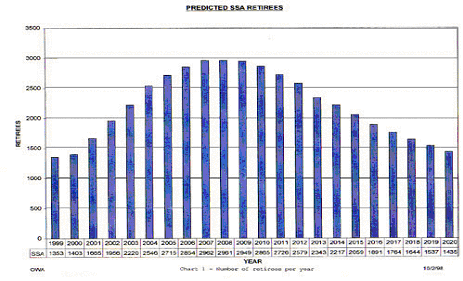
n 1997, the Agency began to analyze the upcoming retirement wave by looking at potential retirements in the next five years. It soon discovered that a large percentage of employees would be eligible to retire by the year 2002, especially at the higher grade levels. But it was not enough to only examine how many employees would be eligible to retire; the Agency needed to determine how many employees actually expected to retire. By examining the number of eligible employees who actually left the Agency on regular retirement over the past ten years, it found that the average employee retiring on regular retirement was 61 years of age. Based on this historical pattern, a model for projecting how many employees would retire in future years was developed. In 1998, the Agency prepared a more comprehensive study of the retirement wave attrition, focusing on predicting the who, where, and when of retirement losses. Agency-wide projections through the year 2020 showed the peak of the retirement wave occurring in the years 2007-2009, when it was expected that approximately 3,000 employees will retire each year compared to an average of 851 retirements per year from 1990 through 1999.
The data analysis for the period 1999 through 2010 projected an increase in the retirements of many key positions. For example, about 66 percent of supervisors, 45 percent of claims representatives, and 48 percent of computer specialists were projected to retire within this time period. [28] The Agency later validated the model by comparing the actual number of retirements with the number projected, and the model was found to be a good predictor. The Agency also projected the succession flow of new hires into key positions and the movement of employees between those positions. This assumes maintaining current staffing levels and the ability to backfill positions as employees left. A key concern was training these new employees, especially if they came on board after experienced workers retire. If there was no period of overlap, it will be difficult to ensure that new employees were adequately mentored and trained in the program complexities and the methods of providing high-quality customer service. In March 2000, the Agency completed a study addressing the issue of succession planning. [29] This report identified four areas where the Agency should focus to address the problems associated with accelerated retirement of the Agency’s workforce: · “Flattening the Wave” · Career Development Programs (CDPs) · Diversity · Training The Agency needed to “flatten the retirement wave” so that the impact of leaving employees and the loss of institutional knowledge can be spread out over a longer space of time. In addition, the Agency needed to provide appropriate and effective career development programs to further invest in the remaining workforce, take advantage of the synergies offered by this new opportunity to increase and improve the Agency’s diversity, and give its workforce the needed tools to handle this new situation through more efficient and effective training.
“Flattening the Wave”
The peak of the Agency’s retirements is set to occur from 2007-2009, coinciding with the retirement of the baby-boom generation, resulting in an increase of workload right when the Agency’s workforce begins losing its most experienced employees. In order to avoid a crisis situation, the Agency needs to spread out the retirements over more years (to minimize the impact of retirements on any particular year) and increase its recruitment and retention practices. From 1996 through 2000, the Agency offered early retirement to its employees, and about 5 percent of those eligible for early retirement took it. [30] This had the dual effect of increasing the normal retirements for each year since 1996 and thus decreasing the potential retirement crunch in 2007-2009. With each passing year, the percentage of early retirements out of total retirements has been steadily increasing (e.g., in 1999, early retirements accounted for 50.5 percent of all retirements). These early retirements allowed the Agency to hire 4,000 new employees from 1997-1999 as replacements for these early retirees. By 2007-2009, these new recruits will be experienced employees, [31] thereby avoiding the feared experience loss and its loss on productivity. In addition to allowing the Agency to replace employees who would have retired during the peak retirement years, the early retirements brings in new workers, with appropriate and up-to-date technological skills. This solution was not an easy choice for the Agency to take; the exodus of present staff meant that existing workloads were that much more difficult for the remaining staff. However, the alternative was felt to be worse; if no efforts were made to flatten the retirement wave, approximately 30 percent of Agency employees would be in trainee status during the 2007-2009 peak retirement years. [32] Another important benefit of the presence of experienced workers was not just to process increasing workloads, but also in the training and mentoring of new recruits. The Agency used formal training to convey the technical programmatic knowledge necessary for a new hire to perform their job, but this formal training was coupled with on-the-job mentoring which is crucial for new hires to see and apply their newly gained knowledge in practice. Mentoring was also a manner in which institutional knowledge was “passed on”. Moreover, while resource intensive (forcing the Agency’s most experienced and productive employees to spend precious time mentoring new hires), it was an investment in the future that produced more knowledgeable and productive employees for the Agency. The success of this effort was based on the ability of the Agency to replace current retirement losses with new hires, and thus the importance of hiring and retention. In FY 2000, the administrative budget request was not fully funded, resulting in the inability of the Agency to hire as many new people as it needs to fully replace all the losses due to attrition and retirement. The Commissioner’s response to Congress was to reduce the Agency’s service goals, and the Agency attempted to do as much as possible with the reduced resources. For FY 2000, the Agency hired approximately 2,000 new employees.
Career Development Programs (CDPs)
One important element in preparing for the imminent wave of retirements has been the acceleration of career developmental programs (CDPs). Under the downsizing of the 1980s, previously existing CDPs were suspended due to the hiring and job freeze. However, as the issue of succession planning began to take on added urgency, the pressing need for CDPs became obvious. They became recognized as an important component to help prepare for the future of the Agency. By March 2000, the average age of a typical Social Security employee was 46.7 years of age. [33] Urgency to develop employee skills for the future began to build, especially for management positions where expected losses were predicted to be very high (the average age being even higher than for the Agency as a whole). The Agency responded by reestablishing development programs at the national, component, and regional levels. From 1997 through 2000, over 1,200 people [34] were selected for participation in these development programs (the first four being national in scope): · Senior Executive Service (SES) Candidate Development Program · Advanced Leadership Program (ALP) · Leadership Development Program (LDP) · Presidential Management Interns (PMIs) · Component-level and Regional Development Programs · Regional Job Enrichment Programs · Leadership Seminars The national CDPs complemented developmental and rotational programs sponsored by various Agency components. The success of Agency CDPs attracted attention both within and outside the public sector; the Agency was benchmarked by numerous organizations (e.g., U.S. Department of Agriculture, Central Intelligence Agency, Pension Benefit Guaranty Corporation, and U.S. Navy). The Commissioner was invited to speak at the National Academy of Public Administration (NAPA) Conference in September 1999 to discuss how the Agency’s strategic plan serves as the foundation for its leadership development activities. These events demonstrated recognition of both the quality and effectiveness of the Agency’s succession planning activities and of the Agency’s investment in the workforce. Senior Executive Service (SES) Candidate Program: Initiated in June 1998, this national program for selected grade 15 employees is a two-year program developing the competencies needed for SES positions. It also seeks to broaden their experiences and leadership abilities through training and assignments. [35] Selected potential candidates had to undergo a rigorous competitive assessment process, and in FY 1998 the first cohort of 36 employees was selected by the Commissioner. Advanced Leadership Program (ALP): Initiated in October 1998, this national program for selected employees in grades 13 and 14 is a two-year program consisting of training and assignments designed to help participants develop the competencies required by mid-level leaders. The candidates received temporary promotions during their participation in the program. In FY 1998, 35 employees were selected. Leadership Development Program (LDP): Initiated in March 2000, this national program for employees in grades 9-12 is also a two-year program featuring training and assignments to develop the competencies required by first line leaders and supervisors. In FY 2000, the first cohort of 61 employees was selected to participate in this program. The candidates received temporary promotions during their participation in the program.
Presidential Management Intern (PMI) Program: In 1977, President Carter issued an Executive Order 12008 [36] establishing the Presidential Management Intern (PMI) Program. It is designed to attract to the federal service outstanding graduate students (Master’s and Doctoral-level) from a wide variety of academic disciplines who have an interest in, and commitment to, a career in the analysis and management of public policies and programs. The two-year internship program enables graduate degree students to be appointed to federal positions as PMIs and to have the opportunity to convert to a permanent federal civil service position. All cabinet departments and more than 50 federal agencies have hired Presidential Management Interns. Since 1997, the Agency has increased its participation with the PMI program (run by the Office of Personnel Management [OPM]), and over 129 PMIs have been selected as of 2000, making the Agency one of the leaders in this national program. Component-level and Regional Development Programs: Agency components and regions were given the mandate to establish their own CDPs. From 1997 through 2000, hundreds of employees have been selected to participate in these programs. A good example of a regional program was the Chicago Upwards Bound (CUB) Program in Region V for grades nine through twelve employees. This one-year competitive CDP was designed to enhance the careers of journeyman personnel in the region who have demonstrated leadership potential. An example of a component led CDP was the Operations Leadership Developmental Program (OLDP) that was run by the Office of Operations. This CDP was similar to the national Leadership Development Program. Regional Job Enrichment Programs: Several regions have established programs to broaden the experience of their employees. For example, in the Seattle Region from 1997 thru 2000, 379 employees have been selected for its Job Enrichment Program, where employees from grades 1-14 participate by gaining experience in another job for a period of 120 days. The Chicago Region also runs two similar programs; the Chicago Employee Exchange and Rotation Program (CHEER) [37] and the Chicago Managers Exchange Program [38] . Both of these programs seek to give employees and managers, respectively, the opportunity to request a temporary work assignment in another office or component for five to 30 working days.
Training
istorically, training was conducted within the framework of the traditional classroom. However, with approximately 63,000 employees scattered in over 1,600 sites nationwide plus training responsibilities for the state disability examiners (who adjudicate disability claims for the Agency), issues such as timeliness, consistency, and funding for travel became increasingly problematic by the early 1990s. The same technology that enabled the steady evolution from paper-based processes to one relying increasingly on computer technology, coupled with the ongoing need to incorporate legislative-mandated changes, required the constant training and retraining of the workforce. The Agency was thus faced with a training dilemma common to large organizations: how to effectively and efficiently provide frequent training to a large, geographically dispersed employee population. Solving this dilemma presented the Agency with a challenge common to corporate and government trainers – how to provide effective training at the least cost at the right time. While classroom training remained a vital part of training strategy, the Agency recognized the limitations of a strict reliance on classroom training. Traveling to a centralized location for training was not always possible, and cost and timeliness become factors when many employees must be trained quickly. Technological advances provided new tools to the trainer, offering a diversity of methodologies from which to choose. Determining which technologies to implement, the Agency considered cost, subject matter, time constraints, and the fact that people have different learning styles and do not respond equally to the same approach. The search for solutions to the training delivery dilemma had been ongoing for years. During that time, training materials were redesigned and various approaches using computer-based training implemented. The focus on technology-based solutions began in 1993, and to identify what the Agency needed to accomplish, almost two years of contacts and visits were completed with private industry and other government agencies (including the Ford Motor Company, the Federal Aviation Administration, the Xerox Corporation, the United States Post Office, and AT&T). Eventually, it was identified that these factors would be important for the Agency to focus on: · Allow for more economical and efficient training; · Improve timeliness and consistency; and, · Maintain or even improve training quality and effectiveness. Simultaneously, the Agency was embarking on the IWS/LAN installation initiative to provide networked computers in lieu of the mainframe-linked “dumb” terminals that were then standard. The combination of extensive benchmarking, advent of the IWS/LAN rollout, and the continued demands for training helped spur a rethinking and reengineering of training delivery methodologies. The result was a hybrid approach using a variety of emerging technologies, each of which was used to address different training needs.
Terminal-based Training: Phoenix Lessons An early and primitive form of computer-based training which had been a mainstay in training for years, it was used especially for portions of entry-level and system enhancement training. Since personal computers were not even a consideration when the original program was acquired, these computer-based training had to be resident on a mainframe computer and accessed via “dumb” terminals by employees. While available to all employees at most locations, the 200 or so lessons eventually developed for use on the system were simplistic and highly text oriented with very limited interactivity. This technologically archaic system has been superseded with the advent of personal computers and the IWS/LAN rollout, but was still in use in a few locations as late as early 2000. With newer technology, OT began to convert all of the old Phoenix Lessons to newer formats, and by mid 2000 this conversion was completed. Personal Computer-based Training: Multimedia/CD-ROM The proliferation of personal computers (PCs) in the 1990s and advances made in multimedia and CD-ROM technology made essential their consideration as a potential training tool. While a technological advance over the old terminals, the stand-alone non-networked PC was ultimately only a super-charged terminal; CD-ROMs offered the individual employee more information than ever before and a spruced up interface, but still had the fundamental limitation of little true interactivity. It did a lot more (e.g., multi-media capability), but possessed the same limitations of being applicable primarily to training projects with a reasonably stable subject matter, large audiences, and common training needs. However, even with these limitations, it did have its successes. For example, the roughly 10,000 employees whose duties include responding to some 58 million or more calls every year to the national 800 number required a large amount of training, on the same subject matter, with the vast majority of them working in large, centralized PSCs or TSCs. Multimedia capable PCs were provided to several sites, and a customer service program was piloted with some 4,000 students. Post training evaluations of these employees yielded an over 95 percent acceptance rate of the content and delivery mode. Based on the results of this pilot, the Agency acquired over 4,000 additional multimedia capable PCs. The Agency subsequently developed a number of other customized multimedia programs including lessons on the Privacy Act and disclosure requirements, stress management, disability entitlement factors, Social Security program orientation and solvency, and additional training in customer service. This internal development of software was in addition to the many existing off-the-shelf software packages already used, thus allowing for a greater scope of materials available to the Agency for training purposes. These packages included portions of a management curriculum, general and basic skills lessons, and other lessons applicable to disability/medical examining personnel such as courseware on anatomy and physiology. As improvements to the IT systems architecture progressed, multimedia/CD-ROM technology has now been relegated as an alternate delivery method when slow response times, poor Internet performance, or other problems made the use of online training methods less desirable. It has been superseded with the advent of the networked environment. The amount of information now available has exploded exponentially, and interactivity, the main limitation of both terminal and PC based training, was now made possible. Network-based Training: Intranet/Internet The advent of PCs, LANs, and the Intranet made network-based training a reality. New net-based tools were selected to meet current and future requirements for the Agency’s training environment and technological infrastructure. Staff was trained in new authoring tools and converted old mainframe-based lessons to the new Web-based delivery platform. Additional net-based “off-the-shelf” lessons were also purchased and piloted before being made widely accessible to employees. As an interim step while the national Intranet infrastructure was being developed, OT leased commercial off-the-shelf courses for local access networks (LANs). [39] The courseware was loaded on local servers and made available to employees’ workstations. The preparation for making this training available to field office locations involved coordination between various components in the Agency to integrate the courseware into the IWS/LAN configuration and to assess the impact on the Agency’s infrastructure. The courseware was approved for use on the national IWS/LAN platform beginning with the March 1998 installations. In 1994, the Office of Systems began the Independent Workstation Learning (IWL) initiative to provide computer-based training to its employees at their workstations through the use of their LAN. The initiative promoted continuous learning at the desktop and embodies the concept of just-in-time training. Beginning in early 1997, renamed the e-Learning initiative, it was extended throughout the Agency through the establishment of the national Intranet. All employees in offices with the IWS/LAN installation completed have access to e-Learning. In recognition of the success of the e-Learning initiative, it received the 1997 National Performance Review’s Hammer Award and the 1998 Government Computer News Award. These awards were received for the development of the online training system and giving employees control and responsibility for their own training and development by promoting continuous education opportunities. With the continual development of the Intranet infrastructure, as part of the Intranet training delivery initiative, the Agency purchased and installed a web-based training server that provided interactive training courseware and materials over the Intranet. Courseware included office automation training as well as in-house developed programmatic-specific courses for claims representatives, teleservice representatives, and other front line employees. The Agency developed a simple but comprehensive approach to employee training for non-supervisory personnel. Designed to help employees gain the tools they need to enrich their development and improve the operation of the organization, it included competency-based training models and self-assessment tools. [40] They were supported by the Individual Learning Account concept, wherein employees were given eight hours of duty time from which to draw in order to take the training they feel they need for competency reinforcement based on the results of their self-assessment. This new approach has not yet been adopted by the Agency, and a recent pilot will help determine the effectiveness of this new methodology. [41] Another significant initiative taking advantage of the Intranet and the Internet was the SSA Online University. This allowed employees to access a large number of web-based training courses at their own time, covering a wide range of topics from information technology to management skills to personal development. Employees can access the university from any place with Internet access (home, work, and library), or from their own workstations through the Intranet. This initiative enhanced ongoing training and development opportunities for employees by improving the accessibility of quality training resources for their use. And lastly, as a backdrop to these training initiatives, the Agency continued to make progress in making all class offerings accessible to employees with disabilities. OT developed templates to convert all courses into a format accessible by software such as JAWS. In addition, the OT web site was redesigned to be accessible to employees with disabilities.
Interactive Video Teletraining (IVT)
Designed as a distance-learning network using an interactive one-way digital satellite technology with a viewer response system, the IVT system was a one-way video, two-way audio system using compressed digital satellite technology. The system used keypads with built in microphones to allow instructors and students to communicate on a real-time basis with few of the limitations normally imposed by geographical separation. It was used for in-service, managerial, and entry-level training on a daily basis. By overcoming the barrier of geographical separation, the IVT program provided consistency in training (reducing duplicative efforts), significant monetary savings (no travel necessary), and helped reduce the glass ceiling effect for individuals who can not travel due to personal/family situations (allowing career advancement without requiring long trips away from home). IVT was the first major acquisition, and became arguably the Agency’s centerpiece, in its diverse approach to delivering training. As a result of the benchmarking undertaken in 1993 and 1994, a proposal was made in early 1995 for a small pilot of 30 downlink sites to test IVT’s effectiveness and determine how the technology could best be used. The pilot was successful, and a demonstration for the Executive Staff in June 1995 resulted their support to proceed with limited implementation in a three-phased approach: · Phase I: Install a broadcast studio in Baltimore and 220 downlink (receiver) sites; · Phase II: Install IVT in all remaining Agency sites; and, · Phase III: Make IVT accessible at the desktop. Initially designed as a limited pilot, IVT quickly mushroomed into a fully functional system. Phase I ran from late 1995 through 1996; a broadcast studio was constructed in Baltimore along with 220 downlink sites (scattered throughout the country, including Puerto Rico, Alaska, and Hawaii). Studio 1 presented its first broadcast in March 1996 to approximately 150 downlink sites. At that time, the broadcast signal was sent via a terrestrial line to the Federal Aviation Administration’s uplink in Oklahoma City for transmission through an AT&T satellite. From 1996 until mid-2000, Phase II progressed and the IVT network grew into a nationwide system with five studios and almost 830 operational downlink sites. Already the largest IVT system in the Federal Government when it was only 220 sites, the Agency expanded still further. In accordance with the original plan, the long-term goal was to provide IVT directly to each individual PC workstation. With the inexorable progress of technology, implementation was put on hold pending planned improvements to the system infrastructure that will supply sufficient bandwidth to permit the sending of full motion, full screen video to individual PCs. Utilization of IVT has been widespread and significant. While most systems restrict audience size to 30 to 60 participants, the Agency routinely served audiences of 300 to 500 viewers with no known detriment to the learning process. On many occasions there were in excess of 1,000 viewers for a single training program. In addition, while teletraining programs in other organizations consisted of standard courses broadcast repeatedly (e.g., entry-level training falls largely in this category), much of the Agency’s programming resulted from an emphasis on training that is timely and meaningful, with new training courses continually being developed and broadcast to coincide with changing workloads and procedures. Programs were repeated only as needed to accommodate different time zones. Great emphasis was also placed upon the use of interaction as a key to providing a quality training experience. Most courses were internally developed, but the Agency had partnered with outside vendors and groups such as Harvard University’s Schools of Government and Business. During its first two years, over 1,750 hours of training representing an estimated 73,000 training instances for Agency and state disability determination service employees were broadcast. Because of the initial successes with the training, it quickly led to the construction of a second broadcast studio in 1997; it was soon apparent that IVT was a valuable training tool. But it was also apparent that its effectiveness was not maximized because it reached too few of the primary customers for whom it was intended – field office employees. By 1997, three separate analysis (the last done by an independent third party) of IVT’s cost and business effectiveness was confirmed; they found no significant difference in learning between IVT and classroom training and documented that there would be significant cost benefits in expanding IVT. Approval and funding was secured in 1997 to expand the system by an additional 610 downlink sites and to add three additional broadcast studios. This expansion included the construction of an uplink facility in Baltimore so that the connection through the Federal Aviation Administration was no longer needed. Additionally, it included the change to a different satellite, yet to be launched. The new downlink sites were selected with the goal of making IVT accessible to the largest number of employees possible. Installations began in late 1997 and were virtually completed as of August 2000. [42] Part of the delay can be attributed to problems with the original satellite; it fell victim to a solar flare in early 1997 requiring the re-pointing of the satellite dishes at every downlink site and limiting transponder availability. In addition, technology upgrades and the transition to a new satellite resulted in delays in launching the new satellite. When it was finally launched in August 1998, the rocket malfunctioned and was destroyed, prompting yet another round of dish re-pointing and delays. As part of the upgrade process, each of the original 220 sites received new equipment, and all sites (new and old) were equipped with a second receiver. Having five studios meant that simultaneous broadcasts became a possibility, and a second receiver would allow downlink sites to receive two different programs at the same time. The new broadcast studios, located in Kansas City (Studio 3), Atlanta (Studio 4), and Dallas (Studio 5), were designed with Studio 1 as the model, but incorporated technological advancements since the first studio in equipment. Each of the new studios agreed to take the lead in piloting one of the major entry-level courses for SSA field employees. Atlanta became responsible for Title XVI Claims Representative training, and Dallas and Kansas City for Title II Claims Representative training. These entry-level classes were traditionally done in classroom sessions averaging 12-15 students each, and they required participants to travel to a central location for the duration of the 7-12 week classes. The pilot IVT classes of 30 students each began in the fall of 1998 and were completed by January 1999. Although all three studios limited daily instruction via IVT to four hours or less, each initially used a different approach in integrating IVT instruction with regular classroom instruction. Subsequent offerings have homogenized the process so that while class length still varies, all three classes are now completely done via IVT. Entry-level classes over IVT now have up to 200 or more students, representing a significant savings in both travel costs and instructor salaries. Once the regional studios became operational and more downlink sites were installed, the value of IVT for training grew with its own momentum. By FY 1999, IVT was used to present over 2,000 hours of training to a total documented audience of over 119,000. [43] The total amount of training presented in FY 2000 was projected to be over 3,200 hours with a documented audience of about 161,000. In addition to the growth in usage, studies showed that training presented via IVT was effective. But, as was the case when the 1997 expansion began, a critical problem was that IVT still did not reach everyone. In specific, only about 50 percent of Agency field offices were equipped with IVT infrastructure. Those without were still relying on in-office ad hoc instruction or video tapes of the IVT programs supplied by other offices. During 1999 and early 2000, cost benefit analyses supported proposals to complete the original goal of bringing IVT to every Agency site. Approval was given for this full expansion, but budget limitations meant that only part of it could be funded as of October 2000. Accordingly, plans were underway to add another 135 downlink sites to the system as well as a sixth regional studio to be located in Auburn, Washington. The expectation was that most of these new downlink sites will be installed by the end of 2000, eventually leaving approximately 535 Agency sites without direct IVT access. In spite of years of studies documenting the effectiveness of video training in the private and academic sectors, the Agency commissioned its own studies from an independent consultant. These studies, on-going experience, and third-party evaluations showed these benefits resulting from IVT: · Reduction in total training time by as much as 28 percent for individual courses; · Reduction in the costs for travel and salaries; · Trainees learned in their offices, making them more productive earlier; · Significant reduction in costs in priority and labor-intensive training; · More expeditious and consistent dissemination of new laws, regulations, and procedures; and · No difference in the level of learning achieved. This last finding was most significant; direct comparisons between IVT and classroom sessions of the same training showed there was no statistically significant difference in trainee performance and learning. In addition, employee reaction to IVT has been favorable. In only a few years, the Agency has moved from concept to operation the largest and most dynamic IVT system in the Federal Government. However, the real achievement lied in the programming, its acceptance by the SSA community, and the substantial cost savings. IVT has enabled timely responses to a number of high level and potentially labor-intensive training efforts with significant reductions in monetary and human resource costs. The learning paradigm of training “whenever we can get it” has changed to “delivery as we need it.” Three examples illustrate this significant change: · The Agency needed to train 500 new Hearing Officers within a short period, and the usual two-week classroom course with 25 students at a time would have been too costly and cumbersome to put together on short notice. By using IVT, all 500 were trained at one time with little to no costs in travel or lodging. Subsequent evaluations showed no reduction in the training’s effectiveness; IVT had changed the old concepts of having to travel to a central site and needing long blocks of time for large training efforts. · As part of its efforts to reengineer the disability process, the Agency presented a 16-hour training session to over 15,000 Federal and state employees. Using IVT, the Agency presented the training in 35 sessions, saving time and money while obtaining a higher degree of consistency in the message. In addition, for the first time ever state, regional offices, PSCs, and hearings employees were trained together, offering opportunities to learn from each other and gain an appreciation of each other’s roles. · In spring 2000, President Clinton signed new legislation that had an extremely short period for implementation concerning the annual earnings test for beneficiaries. Using IVT, training was conducted nationally for field employees within one week after the legislation was signed. While technology and IVT will never totally replace traditional classroom training, there will always be a need for a variety of training delivery methods. The use of technology has clearly becoming a dominant factor in training delivery within the Agency as its advantages become apparent to more and more of its managers and employees.
Physical Infrastructure & Security
he Social Security Administration (SSA) operates over 1,300 field offices in all 50 states plus Puerto Rico, the Virgin Islands, and other American territories. In addition, there are another ten regional offices, six processing centers, 36 teleservice centers, and a large headquarters complex in Baltimore, and it is clear that the Agency occupies and manages a large amount of real estate. But physical infrastructure is more than just the number of buildings managed; it also includes the actual physical work environment, including furniture, hardware, and security. From the earliest strategic plan through the current plan, the Agency has focused on employee satisfaction, and has defined one of its goals to “Create a Nurturing Environment for SSA Employees.” In line with this focus on employee well being, the Agency engaged in a number of initiatives from 1993 to 2000 to improve infrastructure and physical security.
The Office of Facilities Management (OFM) manages the Agency’s facilities
programs. The OFM directs the Agency’s real property program,
including short- and long-range facilities planning; design, construction,
and leasing of the headquarters facilities, facilities maintenance,
repair and construction projects, and policy development related
to these operations. It works closely with the General Services
Administration (GSA) to help administer offices in the field. Upgrade of the Headquarters Complex
n 1993, the Agency and GSA jointly developed a long-range strategy to upgrade the Agency’s headquarters complex buildings in the Woodlawn area of Baltimore, Maryland. The 280-acre, ten government-owned buildings [44] were beginning to show their age; most of the buildings were built in the early 1960s to 1970. Major renovations were needed, and when construction began on a new facility to consolidate the Health Care Financing Administration (HCFA) to another site, the moving of HCFA employees out of the east campus buildings [45] gave the Agency the window of opportunity to initiate these major renovations. In 1995, the Woodlawn Master Plan was published, and it established short- and long-term goals to deal with issues such as a theme for the complex, building facades, pedestrian and vehicular circulation, site entry and identification, internal organization and circulation, and solar/day lighting issues. This document became the Agency and GSA’s vision for the future of the Woodlawn Complex, and it served as the basis from which designs for campus-wide renovations were developed. Headquarters’ building redesign and renovation were scheduled as follows:
Renovations included heating, ventilation, and air conditioning (HVAC) retrofits; replacement of the brick façade, roof, windows, electrical distribution equipment; removal of all known hazardous materials (e.g., asbestos, lead paint); installation of fire sprinkler systems, energy efficient lights, skylights, motors, and pumps; and, other repairs necessary to bring the buildings into compliance with the Americans with Disabilities Act (ADA). These state of the art renovations will provide a modern, safe, and healthy work environment. Specialized spaces were designed into the buildings (e.g., conference centers; training centers and training rooms; appliance centers; and audio-visual studios), and employees were provided with new, improved workstation systems furniture. Equally important, these renovations installed and supported the technological infrastructure necessary for the IWS/LAN rollout. Renovations for the remaining buildings of the headquarters complex are anticipated to follow after the completion of the renovation of the Operations building. These remaining buildings include the West High Rise, West Low Rise, and Altmeyer Buildings. The completion of these renovations will result in a state of the art workplace environment that Agency employees can be proud of, and confident of their health and safety. In addition to the actual physical environment, the Agency also implemented other safety initiatives such as in the area of fire protection.
Fire Protection Initiatives
wo events in the 1990s significantly changed the way the Agency’s fire protection activities were conducted: the delegation of authority for control of buildings from GSA to the Agency and significant reduction in the GSA fire protection staff. [50] The Agency became responsible for operating large buildings nationwide, and had to quickly develop the staff and skills necessary to do so effectively. While the Agency did have experience managing real estate in the headquarters complex, the regions were not as well prepared. In 1993, Agency staff completed the design and installation of a new fire alarm system throughout the entire headquarters complex; the new system significantly enhanced the Agency’s ability to provide fire alarm coverage throughout the headquarters complex buildings. In addition, the Agency undertook various other initiatives to ensure that fire protection in its buildings nationwide complied with the Americans with Disabilities Act (ADA) of 1999 standards and fire alarm systems.
Environmental Health Programs
n an attempt to provide a physical environment that promoted the health and well being of its employees, the Agency began to assess how the work environment affected the health of its employees. The Agency established the Environmental Protection Program in 1996; it was designed to ensure that all employees were housed in a safe, healthy work environment. The program expanded on existing environmental health and safety (EHS) programs by obtaining information about building systems and employee concerns, and to identify and resolve existing and potential problems. These initiatives impacted core business processes and customer interfaces in beneficial ways that were not originally foreseen. Many of the initiatives were designed to enhance the physical environment and educate employees so that they could better understand and respond to arising EHS issues. While targeted towards employees, building improvements often benefited the American public who came and visited any of the Agency’s 1,300 plus facilities by eliminating or reducing the risks of hazardous situations. The heightened awareness and state of readiness fostered by employees regarding EHS issues allowed the effective and timely resolution of any rising EHS problems. Employee satisfaction, and hence productivity, increased with the reduction to the risks of employee injuries and property loss. The initiatives focused on areas like: (1) Industrial hygiene (identification, remediation, prevention, and management for air quality, water quality, and asbestos management); (2) Comprehensive assessments of EHS programs in field offices (designed to provide initial baseline data on EHS performance, identification of EHS non-compliance, and implementation of interim/long-term corrective action); (3) Headquarters preventive maintenance program (preventive maintenance assessments initially focus on headquarters buildings, with long-range plans to expand to delegated facilities nationwide); and, (4) Education and awareness initiatives (e.g., hazard communication training; cardiopulmonary resuscitation training; user friendly furniture training; communication awareness). Many of the initiatives led to significant gains in safety and satisfaction in many field offices.
Recycling and Energy Efficiency
hroughout the 1990s, the Agency has remained at the forefront of the Federal Government’s recycling program, consistently exceeding the goals set forth by the Clinton Administration. [51] In 1997, the Deputy Commissioner for Finance, Assessment, and Management (DCFAM) was named the Agency Environmental Executive (AEE), responsible for sponsoring and chairing events that provide educational opportunities for Federal employees and awareness of environmental issues for the public. In conjunction with the White House Task Force on Recycling, the Agency developed a strategic plan to implement the Clinton Administration’s recycling goals. From November 1997 through 1999, the AEE chaired the Federal “America Recycles Day,” held annually on November 15. A joint effort of by White House Task Force members, the Agency organized, monitored, and administered the activity, soliciting participation from both Federal agencies and the private sector. In April 2000, the Agency sponsored a recycling awareness and energy conservation exhibit on the Mall in Washington, D.C. Agency employees and its recycling mascot, “Recycle Billy,” provided information on the Agency’s recycling programs, and distributed mini-recycling bins, recycling pins, and a wide variety of recycling and energy conservation literature. The exhibit was one of the most popular attractions of the over 50 booths sponsored by other Federal agencies and private sector groups. President Clinton has released various Presidential Executive Orders (EOs) involving recycling and environmental issues, and various initiatives within the Agency were implemented because of these EOs. In 1998, EO 13101 [52] resulted in the implementation of awareness training in teleservice centers (TSCs) and program service centers (PSCs), bringing about the appointment of recycling coordinators at each of these locations. In 2000, EO 13148 [53] resulted in the Agency reviewing its existing environmental management systems and auditing programs purporting to promote pollution prevention. As a consequence of the training and awareness fostered by these and other initiatives, Agency facilities were well equipped to recycle. For example, the headquarters complex has the capability to recycle aluminum cans, plastic bottles, glass bottles, white paper, mixed paper, magazines, newspaper, phone books, cardboard, styrofoam, wood pallets and scraps, fluorescent lamps, electronic ballasts, printer toner cartridges, and batteries. The Agency also promoted recycling with its outside contractors; stringent recycling requirements were built into contracts for services at Agency facilities. In addition to recycling, the Agency has been proactive in meeting the goals established by the Clinton Administration in regards to energy efficiency. The Energy Policy Act of 1992 and EO 13123 [54] set the goals, and the Agency strategies for meeting these goals were carried out through a combination of energy audits, energy conservation projects, and prospectus level projects throughout its facilities management. The Agency designated a Senior Energy Manager who met regularly with Department of Energy representatives and participated on the Interagency Energy Management Task Force. In recognition for its progress, the SSA Senior Energy Manager received the “1999 Federal Energy and Water Management Award” from the Federal Interagency Energy Policy Committee for exceptional accomplishments in the efficient use of energy in the Federal sector. Institutionally, building/facilities managers were established at every Agency delegated facility, and they were responsible for understanding energy regulations and guidelines and for implementing energy conservation measures, monitoring energy consumption, and evaluating costs and savings.
Environmental Accomplishments
Agency accomplishments in environmental issues included: · Installed motion sensors in the headquarters complex, Metro West, Northeast PSC, Mid-Atlantic PSC, Great Lakes PSC, Western PSC, and Wilkes-Barre Data Operations Center to save lighting costs; · Installed energy efficient motors in mechanical space of delegated buildings; · Installed energy efficient lighting, including compact fluorescent lamps in place of incandescent lamps, at all delegated space; · Completed the “Campus Cross-Tie” project, providing emergency power to the headquarters complex with the generators from the National Computer Center; · Retired and replaced old, inefficient central plants and equipment with new energy efficient, environmentally friendly equipment with installed energy management systems; [55] · Installed lighting controls;[56] · Installed variable speed drives for pumps, cooling tower fans, and air handlers; [57] · Replaced automatic sliding doors with revolving doors at the Mid-Atlantic PSC and headquarters complex (revolving doors provide a positive seal at all exterior entrances and energy savings by preventing the loss of conditioned air); · Installed water conservation equipment in the form of low flow aerators (all delegated buildings), and low flow toilets (headquarters and Mid-Atlantic PSC); and · Performed energy audits at all delegated buildings to assist in identifying and prioritizing energy conservation projects. In FY 1999, six comprehensive energy and water audits were completed at delegated facilities. Most of these audits were accomplished using utility energy service contracts, and from these audits, the Agency initiated numerous projects in 2000 in the headquarters complex and at the Great Lakes and Mid-Atlantic PSCs. These projects included new lighting, heating, ventilation, air conditioning, lighting controls, and variable speed drives; completion of these projects was projected to be FY 2001. In addition, sustainable building designing was in progress in several large Agency buildings. In conjunction with GSA, the Agency completed renovations in its delegated buildings with values in excess of $30 million. The vast majority of these renovations are GSA-funded prospectus level projects, and while not exclusively energy projects, they significantly affect the energy baseline by installing: 1) Energy efficient central heating and air conditioning plants; 2) Energy efficient windows and doors; 3) New computer-based central energy management systems; and 4) Natural day lighting and lighting controls. The Agency also renovated existing buildings with energy efficient technologies such as thermal storage, efficient lighting, co-generation, and passive solar technology. GSA submitted and received approval for a prospectus project to build a new, standalone childcare facility at the Woodlawn, Maryland, complex; it will be designated the Agency’s showcase facility. Renewable technologies will be incorporated into the design of this facility, including ground source heat pumps, natural day lighting, and passive solar design. Energy Training Accomplishments
The Agency took very seriously its investment in its facilities staff on issues of energy efficiency, and thus sent its building managers and staff to attend various training classes and conferences on such topics as life cycle cost analysis, alternative fuels, lighting controls, and demand side management practices. Agency employees also attended GSA regional conferences to become familiar with current strategies in GSA’s program for reducing energy consumption. The Agency has participated in Department of Energy (DOE) interactive training programs to ensure the presence of a trained energy manager in every Agency delegated facility. The Agency scheduled additional training designed to help energy managers track energy usage and cost.
Agency employees nationwide were educated on the need for and benefits
of energy conservation through an awareness program via e-mail,
newsletters, and the Agency print magazine, OASIS. Employee Workstation Improvements
s early as 1983, the growing emphasis on automation began raising safety issues for employees. Accelerated dependence on computers to process workloads resulted in a labor arbitrator’s ruling mandating the Agency to install user friendly workstations in all field and teleservice offices where video display monitors were used. Throughout 1993 and 1994, extensive studies and negotiations with AFGE resulted in 13 new workstation designs based on employee functions. These designs incorporated a number of user friendly features, such as electrically adjustable tables to alleviate health problems associated with extensive use of data processing equipment. In May 1994, the Agency began installing the new systems furniture workstations in field offices using furniture procured from the Federal Prison Industries (FPI), the Agency’s mandated furniture source. Because the original arbitration mandate declared that the furniture be installed in all field offices within five years, the project required expeditious handling. Discussions with FPI revealed that they would be unable to supply the furniture in the quantities within the timeframes required. As a result, FPI granted a waiver for the Agency to contract with private sector vendors to supply some of the furniture to the Agency’s field offices. On September 20, 1995, Herman Miller, a furniture store, was awarded a 4-year contract for installation of user friendly furniture in field offices throughout the nation. This contract, the largest of its kind awarded by any Federal agency as of 1995, was managed within the Agency from initiation (development of requirements) to evaluation of bids to final award. A team was established to develop the work plans and to implement the contract. The team, assembled from diverse components within the Agency, worked swiftly to develop and implement processes, procedures, guidelines, case controls, and budget mechanisms for using the new contract to install ergonomic furniture. Eventually, it was decided that FPI would concentrate on providing and installing furniture at the large sites (e.g., PSCs and headquarters) and providing this service in a few field offices. Herman Miller was used to provide furniture for most field offices, hearings offices, TSCs, and other smaller offices. Though Herman Miller’s contract was ending in 1999, many field offices had not yet resolved pressing space and lease issues and were unable to receive and install the new furniture. Since FPI was still fully engaged with the larger sites, the initial waiver was extended for 2 years, and this new contract included streamlined procedures to shorten timeframes for furniture design while reducing the Agency’s procurement-related workload. Using the two furniture sources, FPI and Herman Miller, the Agency installed 46,946 workstations in 1,436 field office sites (96 percent of the workforce) with user friendly furniture. [58] In addition, 8,751 workstations have been installed in the PSCs; 95 percent of PSC employees enjoy user friendly furniture workstations as of FY 2000. Installation of the user friendly furniture in headquarters components continues, linked to the master housing plan and renovations of the various buildings and properties housing headquarters components. Over 6,500 workstations have been installed, and this portion of the project is expected to extend over an additional five years.
Modern Workstation Training
The objective of modern workstation training was to educate Agency employees in the proper use and adjustment of workstations to provide greater comfort and reduce the number of physical injuries. The training initiative is the result of recommendations from a job safety analysis conducted in 1995, recommendations later confirmed through feedback from employee focus groups. In 1998, there was a pilot study during which the Public Health Service conducted several forms of ergonomic workstation training at the Agency’s field offices. An independent contractor evaluated results, and based on results of the pilot study the contractor recommended that the Agency’s approach be a cost-effective combination of train-the-trainer and self-instructional pamphlets. In April 1999, the DCFAM and the Office of Operations Management, along with the Technological Environment Advisory Committee [59] agreed to this approach.
Modular Furniture Retrofit Project
Prior to development of the fully adjustable systems workstations, the Agency installed modular furniture workstations in field offices as well as first generation (not electrically adjustable) systems furniture. Although state-of-the-art at the time of installation, it lacked the level of adjustment the current workstations contain. Funding for continuation of modular furniture retrofits beyond the pilot sites was limited. Careful analysis was made of risk exposure, minimizing expenditures for the project while maximizing benefits to the Agency. As a result, retrofits were generally done during an office relocation since this eliminates duplicative site preparation costs and minimizes disruption of an office by furniture reconfiguration. This approach kept costs low and within budget.
Physical Security
s a direct result of the Oklahoma City Bombing and a perceived increase in violence in the Agency’s field operations, physical security became a salient issue for many employees. The relative safety of the work environment was no longer taken for granted, and perhaps the greatest stride in employee security was the raising of awareness fostered by both tragedy and Agency educational programs. Since 1996, the Agency has had a well-developed, nationwide physical security program. In 1995, the Agency employed a security-consulting firm to conduct physical security surveys of its regional offices, PSCs, field offices, TSCs, and Office of Hearings and Appeals (OHA) hearings offices. From the firm’s findings and recommendations, a matrix of the top ten security improvements most frequently recommended in the reports were developed and used as a guide to direct, develop, and fund improvements to field office security. In addition, the National Health and Safety Partnership Committee for Security (NHSPCS) sponsored the first SSA/AFGE Physical Security Conference in 1995 featuring speakers, panels, and breakout sessions under the guidance of union and management facilitators. The conference allowed managers, union officials, members of other federal agencies, and local law enforcement participants to voice their concerns about security issues. They identified training/informational needs and shared ideas on solutions on such issues as employee and customer/client safety and security, both inside and outside the office. The goal of the conference was to produce a realistic set of recommendations for improving security. Attendees identified major physical security concerns and issues facing employees and proposed solutions that became the focus of subsequent NHSPCS activity. A second security-consulting firm hired in 1996 conducted further physical security surveys at sites not covered by the first survey (e.g., Agency resident stations, contact stations, and OHA satellite offices). Based on this firm’s findings and recommendations, the Agency identified further areas of improvement for employee safety and provided additional funding to improve security at these facilities. In 1998, the Agency established a security tactical plan and provided funding of $15.2 million to its field offices, PSCs, TSCs, OHA offices, regional offices, and the data operations center for additional guards, physical security upgrades, and enhancements professional security services nationwide. Physical security upgrades included such things as plastic windows and emergency alarm buttons in interviewing booths. In addition, the Agency contracted with another security-consulting firm in 1999 to conduct physical security surveys of 154 field offices that had relocated since August 1997. Using this firm’s recommendations, funding was provided to enhance the security at these relocated offices. All of these surveys gave the Agency a large amount of data and information to base future improvements. The Agency developed a database to capture information on the status of the over 14,000 recommendations made by the security-consulting firms for increasing security nationwide. As a further service to its employees, the Agency used the Security Information Bulletins via the Intranet and the OASIS magazine to communicate safety findings and suggestions. The Agency also issued annual reminders to its managers to update and discuss Security Action Plans and Occupant Emergency Plans with their office staffs and the union. [60] The plans help in these ways: · Direct employees’ actions in emergency situations; · Prompt coordinated steps to be taken to obtain assistance when needed; and, · Ensure that employees were aware of proper protective and emergency procedures including anticipating, controlling, and reporting demonstrations, sit-ins, and civil disorders that may occur in or near the office/facility. Plans were tailored specifically to each facility’s unique situation and security needs, and were annually updated and reviewed with the staff. The Agency worked with the Federal Bureau of Investigation and the Defense Security Service to shorten the time needed to complete suitability checks on contract employees. These actions permit electronic checks to be conducted within hours rather than months, and the Agency implemented electronic screening of contract employees and child care providers through the use of the National Crime Information Center, Integrated Automatic Fingerprint Identification System, the Defense Security Service, the Agency database, and the Immigration and Naturalization Service. All of these measures to foster employee confidence and security were undertaken by the Agency to protect its most important asset, its employees. While Oklahoma City cast a shadow over all Federal agencies and removed the innocence of Federal employees in regards to their own personal safety, some positive actions did result from this terrible tragedy. Increased physical security initiatives and awareness education programs have been instrumental in creating a protected work environment and the safer employee.
Internal Communications
uring the 1993-2000 period, the Agency restructured and refocused its management-employee communications program. A new emphasis was placed on providing more timely communications with employees and on opening more direct communications channels between the Commissioner of Social Security and the Agency’s workforce. Moreover, advances in technology presented new information vehicles for the Agency’s communicators to use. The mass utilization of e-mail and the eventual networking of the vast majority of the Agency into the IWS/LAN national network created instantaneous connections. Communications that once took weeks at great cost were disseminated in minutes for next to nothing. More importantly, issues that were formerly deemed unimportant to employees (in part because of the costs associated with mass communication) were now addressed freely with the national audience of all SSA employees. They felt a connection with the entire organization, and had a sense of investment with the Agency. Aside from this global view of communication, individual components within the Agency also took advantage of the new communication avenues open to them. Each component set up its own internal communication/e-mail networks to spread news and information to their own employees, and often times developed issue/component specific e-newsletters for wider audiences. Examples of information vehicles used by the Agency included: OASIS: the Agency’s magazine – Published quarterly, OASIS was the primary direct informational vehicle used by the Agency to convey to its widespread employees important actions, issues, and initiatives. Before the advent of e-mail and the IWS/LAN rollout, OASIS was almost the only national vehicle of information to communicate from headquarters to the rest of the Agency. Commissioner’s Broadcasts – In 1995, in response to the tragic bombing of the Federal building in Oklahoma City that claimed the lives of more than 100 people (including 16 Agency employees) the Commissioner of Social Security issued a nationwide e-mail broadcast to share breaking news with our workforce. Updates on the recovery efforts in the aftermath of the bombing were issued in the succeeding week. Deputy Commissioner’s Broadcasts – The Deputy Commissioner has also institutionalized the email vehicle for broadly communicating with employees on a myriad of topics and concerns. Employee response to the communication and to e-mails, then a relatively new tool, was positive due to appreciation of the speed with which employees across the nation could be informed. As a result, the Commissioner decided to make regular use, on an as needed basis, of e-mail to inform employees about pressing issues and events. These e-mails became institutionalized as the Commissioner’s Broadcasts. News Bytes – Approximately 10 months after the first Commissioner’s Broadcast, the agency inaugurated the use of News Bytes, a free subscription e-mail newsletter for any Agency employee with an e-mail address. These provided brief synopses of general interest news that were not generally pressing. Headquarters Happenings (formerly the Central Office Bulletin) – Aimed specifically at the Agency’s Baltimore Woodlawn headquarters complex, this e-mail instrument was used to disseminate all types of information relevant to the headquarters. Disability Notes – This regular email communicates important information of interest to the disability community about recent developments. It was distributed freely to those interested in the disability program both within the Agency and in external agencies and organizations. It was intended to be informational and not an official expression of policy. It as available by hard copy, email, and on the Internet. [61] Security Information Bulletins – SSA published and distributed advice to Agency employees on matters affecting their safety by means of these Security Information Bulletins. They covered various security and safety issues, and offered suggested actions and initiatives that offices could take to prepare for and respond to disruptive customers; itemized reminders for parking lot security, office access controls, and security in restrooms; and, providing instructions for handling bomb threats or suspicious items. In addition to these employee communication initiatives, individual components also began to further communication with other components. For instance in April 1998, the Office of the General Counsel (OGC) and the Office of Hearings (OHA), in an effort to improve effective communication between the two components, formed the Program Adjudication & Litigation Workgroup (PALs). The mission of this group was to coordinate the adjudication and litigation functions involving Social Security programs, to improve communication and understanding by developing a shared concept of defensibility, and to enhance the Agency’s litigation position by improving the quality of decisions, ensuring the integrity of the adjudication process, and avoiding damaging court precedents. The PALs continued to work on other initiatives in an effort to improve the Agency’s success in litigating transcript litigation. The Agency is committed to providing information to its own employees. By involving them in the dialogue of Social Security issues, employees will feel a greater sense of investment and involvement in their work, increasing both job satisfaction and a sense of belonging. The Agency is using all available communications outlets, both old and new media, to reach its employees.
[1] Survey results are in the Archive material. [2] Improvement Plan is in the Archive material. [3] See description of MMP in SSA report “Gathering and Using Customer Information to Improve Service to the Public” issued March 2000. [4] Full-time Special Emphasis Program Managers, located at the headquarters complex, administer each of the Special Emphasis Programs. In the regions, Civil Rights and Equal Opportunity Managers administer the Special Emphasis Programs. These managers conduct activities promoting the employment and advancement of their members; they provide advice and referral services to field and headquarters personnel on matters that include minority recruitment, community outreach, complaints of discrimination, and career development. [5] The CLF comprises of persons 16 years of age or older who were employed or seeking employment. Persons in the Armed Forces are excluded from the CLF. CLF data comes from the Office of Personnel Management’s 1999 Annual Report to Congress on Federal Equal Opportunity Recruitment. [6] Schedule A allows persons with disabilities to be evaluated and certified by State Vocational Rehabilitation Centers and appointed non-competitively. [7] This program allows college graduates from underrepresented groups who have completed their undergraduate programs with a 3.45 GPA or better (or finished in the top 10 percent of their graduating class) to be hired non-competitively. [8] The program authorizes the Agency to hire 25-50 students each year for service delivery positions; students will attend college full-time and work part-time each semester. [9] Combined budget of $3.5 million was used to process and provide reasonable accommodations for over 500 requests. [10] The cost for interpreter services in 1995 was $355,102. [11] Siemens Nixdorf Information Systems gave the award to the Agency for being proactive in seeking to employ blind and visually impaired persons. [12] Awarded for the Agency’s high levels of hiring people with disabilities. [13] At a cost of $230,000. [14] EO 13163 (“Increasing the Opportunity for Individuals With Disabilities To Be Employed in the Federal Government”) and EO 13164 (“Requiring Federal Agencies to Establish Procedures to Facilitate the Provision of Reasonable Accommodation”); both signed and promulgated on July 26, 2000. [15] See Exhibit 1. [16] Membership consists of the Commissioner, Principal Deputy Commissioner, six Deputy Commissioners (or their Assistant Deputy Commissioner), and for the union, the AFGE President, General Committee Spokesperson, and six Component Heads (or their Principal Designee). The NPC currently (as of November 2000) meets the first Monday of every month. [17] The Philadelphia Region alone realized annual savings of approximately $30,000 based solely on the reduction in the number of grievances advanced to arbitration during that period. [18] Such as the Clinger-Cohen Act of 1996 (Public Law 104-106) which assigns the Agency’s Chief Information Officer the responsibility of developing, maintaining, and facilitating the implementation of IT architecture (ITA). [19] Such as the June 1997 memorandum from the Office of Management and Budget (OMB Memorandum M-97-16) providing guidance to federal agencies on the development and implementation of ITA. In accordance with OMB guidance, the ITA should integrate the business processes and goals of the agency with IT acquisitions and should focus on work processes, information flows, and standards. [20] Into the Automation Investment Fund. [21] At a value of $279.5 million. [22] At a cost of $50.2 million. [23] The eight FSPs are in Mexico City, Guadalajara, Ciudad Juarez, Athens, Frankfurt, London, Rome and Naples. [24] During FY 2000, approximately 300 of the Agency’s 2,900 paper forms were converted into an intelligent fill-able electronic format. [25] The workstations have more memory, faster processors, and 17-inch monitors. [26] The Internet address of the Agency’s acquisition site is www.ssa.gov/oag/. [27] In 1980, the Agency had over 84,000 employees, but this number has decreased over 17,000 (over 20 percent) during the following two decades to its FY 2000 level of a little below 63,000 employees. [28] Predicting Retirement Attrition for a Maturing Workforce: October 1998, Office of Workforce Analysis, October, 1998. [29] Workforce Planning at the SSA, Office of Workforce Analysis, March, 2000. [30] 524 in 1996, 825 in 1997/98, and 1,381 in 1999. Workforce Planning at the SSA, Office of Workforce Analysis, March, 2000, pg 4. [31] Experienced employees are defined as having worked in their capacity for at least 3 years. [32] Workforce Planning at the SSA, Office of Workforce Analysis, March, 2000, pg 5. [33] Workforce Planning at the SSA, Office of Workforce Analysis, March, 2000, pg 1. [34] Workforce Planning at the SSA, Office of Workforce Analysis, March, 2000, pg 5. [35] A rotational assignment outside the Agency is required for SES candidates to further broaden their experiences. [36] Signed August 25, 1977. [37] Initiated in 1998. [38] Initiated on October 8, 1997. [39] These early off-the-shelf courses were primarily on Microsoft Office 95 and 97 and Internet Explorer. [40] The models addressed the training aspects of job performance and career development. The self-assessment tools were designed to help employees assess their skill and knowledge levels anonymously. [41] Pilot was scheduled from FY 2000 through FY 2001 in the Denver Region. [42] As of August 2000, 11 sites remain to be installed due to their individual situations. [43] Documented audience numbers were the number of employees who log in on the viewer response system. A subsequent study suggested that many employees did not actually log in, suggesting that the actual total audience could be up to double the documented audience numbers. [44] Consisting of approximately 2,243,000 square feet of usable space. [45] Approximately 6,100 employees work at this facility performing a variety of tasks for the Agency (e.g., systems administration, long-range and strategic planning, claims processing and administrative activities). [46] The Security West building has 800,000 square feet of usable space, and a major focus of this project was to improve the working conditions of its 3,500 employees. [47] The East High Rise has eight stories and 130,200 square feet of usable space, and the East Low Rise has three stories and 111,605 square feet of usable space. [48] The Annex has four stories and 311,171 square feet of usable space. [49] The Operations Building has four and one half stories and 800,053 square feet of usable space. Its renovation will include a complete renovation of the main cafeteria, and the Child Care Center will be relocated to a new, stand-alone facility (a separate study determined that the most cost-effective way to keep the Center in operation during and after the renovations was to relocate it). [50] Another consequence of streamlining government, GSA began to delegate the daily management of buildings to the agencies they held the buildings for. [51] Attached (APPENDIX VII.A - DCFAM) are summaries of the Agency’s recycling efforts for FY 1997-1999, listing materials and amounts the Agency recycled at HQ buildings (including revenue generated through recycling). [52] Greening the Government through Waste Prevention, Recycling, and Federal Acquisition, signed September 14, 1998. [53] Greening the Government through Leadership in Environmental Management, signed April 21, 2000. [54] Greening the Government through Efficient Energy Management, signed June 3, 1999. [55] Plants completed: Western PSC, Great Lakes PSC, Mid-Atlantic PSC, headquarters, National Computer Center, and the Supply Building. [56] Plants completed: Western PSC, Great Lakes PSC, Mid-Atlantic PSC, headquarters, National Computer Center, and the Supply Building [57] Plants completed: Western PSC, Great Lakes PSC, Mid-Atlantic PSC, headquarters, National Computer Center, and the Supply Building [58] As of when? [59] Which includes both management and the American Federation of Government Employee (AFGE) members. [60] Security Action Plans and Occupant Emergency Plans provide security policy and procedures for people, records, equipment, and the office/facility. [61] www.ssa.gov/odhome/ |

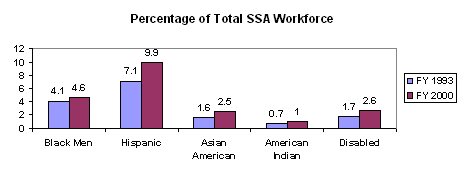
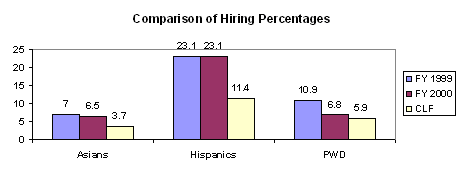
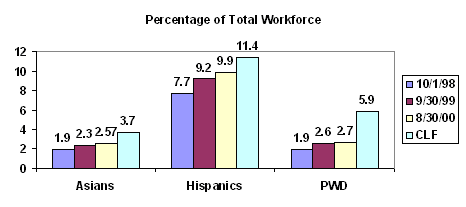
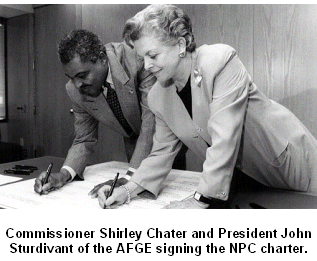 To address and formalize partnership at the national level, the
National Partnership Council (NPC) was formed in 1994 comprised
of high-level members in both the union and the Agency.
To address and formalize partnership at the national level, the
National Partnership Council (NPC) was formed in 1994 comprised
of high-level members in both the union and the Agency.