Special Studies
Special Study #2:
Professor Theron Schlabach on "Rationality and Welfare"
In 1968 the Social Security Administration commissioned a study by Professor Theron Schlabach of the History Department of Goshen College. The purpose of the study was to examine the period prior to the passage of the Social Security Act of 1935 to identify and trace some of the major intellectual developments in the years prior to the adoption of the Social Security program. In particular, Professor Schlabach's report focuses on one major theme from this period, the interplay between traditional personalized approaches to the problem of economic security versus the development of institutional structures designed to "rationalize" responsibility for the problem of economic security. As Professor Schlabach convincingly documents, this was a major philosophical theme within American thought for many years and was an important issue in the public policy debates leading up to the passage of the Social Security Act.
Professor Schlabach illustrates his central thesis by recounting the positions and the actions of each of the major players in the public policy debates about economic security: chartiable organizations; the social insurance movement; social workers; the medical profession; business; labor unions; and policy experts. It will be illuminating for many readers to learn what the role and positions of each of these interest groups was in the debates leading up to the Social Security Act. Especially noteworthy is the extended Bibliographic Essay Professor Schlabach provides at the end of his manuscript. This is a handy guide to the literature as it existed at the end of the 1960s.
Professor Schlabach's study was published internally within SSA in September 1969, under the title "Rationality and Welfare: Public Discussion of Poverty and Social Insurance in the United States 1875-1935." Although Professor Schlabach's study has been widely read within SSA, it has never before been published or made available to a broader audience. We are therefore very pleased to be able to make available, for the first time, the full text of Professor Schlabach's 1969 study.
|
|
| Professor Theron Schlabach, 10/18/01. SSA History Archives. |
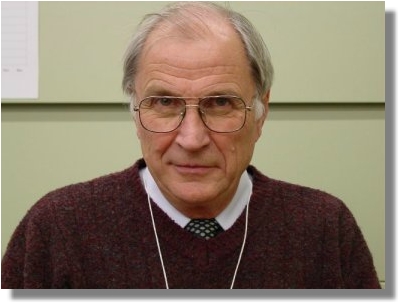
| Author's Comments, 2001 After thirty-two more years of active history
scholarship I still believe that the report that I made to the Social
Security Administration in 1969 was a highly worthwhile contribution
to scholarship. Therefore I am delighted to cooperate with the Administration's
Archivist, Mr. Larry DeWitt, as he makes it available on the internet. |
| "Rationality
& Welfare: Public Discussion of Poverty and Social Insurance in
the United States 1875-1935" by Professor Theron Schlabach |
| Preface I. COS: A False Start II. Toward a Rationalization of Welfare III. Social Workers: Professionalism, Reliefism, and Passivity IV. Medical Men: Personalized Prescription for Institutional Illness V. Businessmen: Confusion of Criteria VI. Labor Unions: Organization with Rationalization VII. The Experts' Two Designs Epilogue Bibliographical Essay |